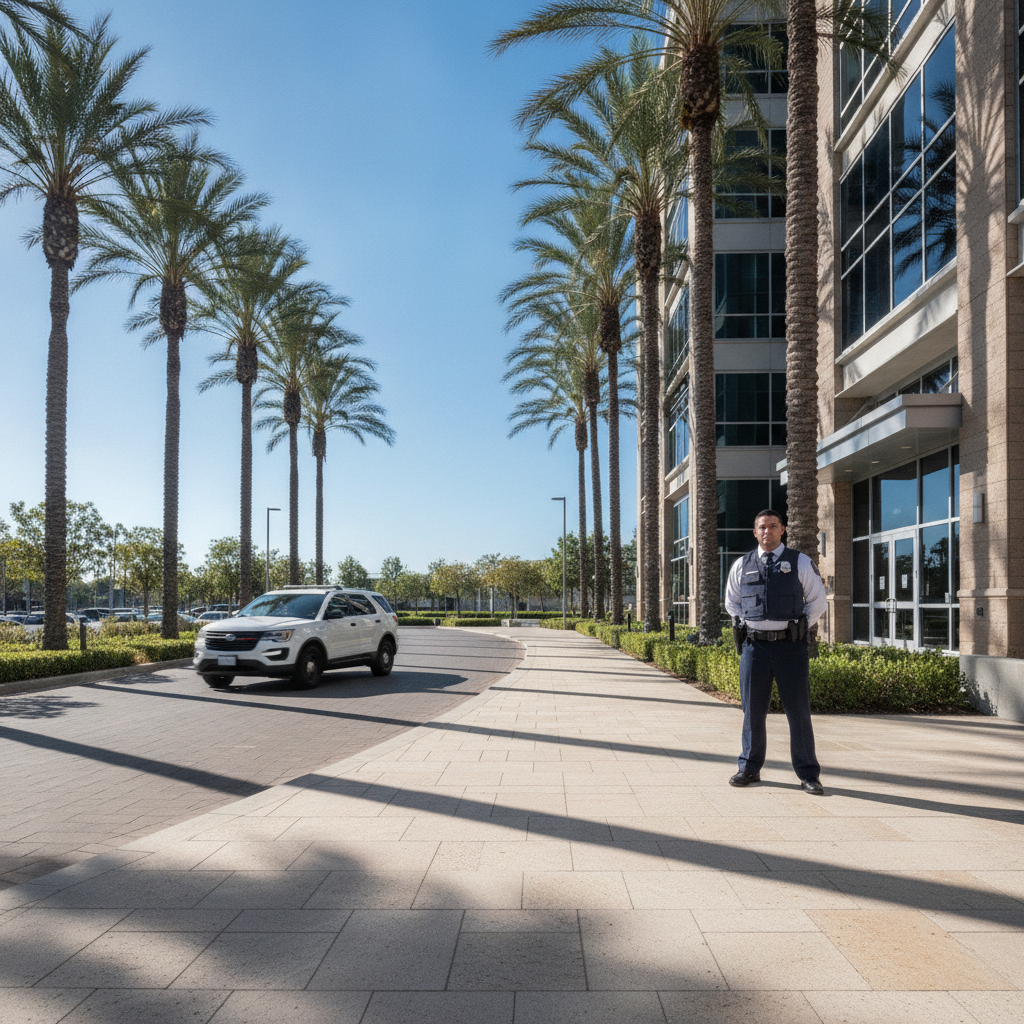
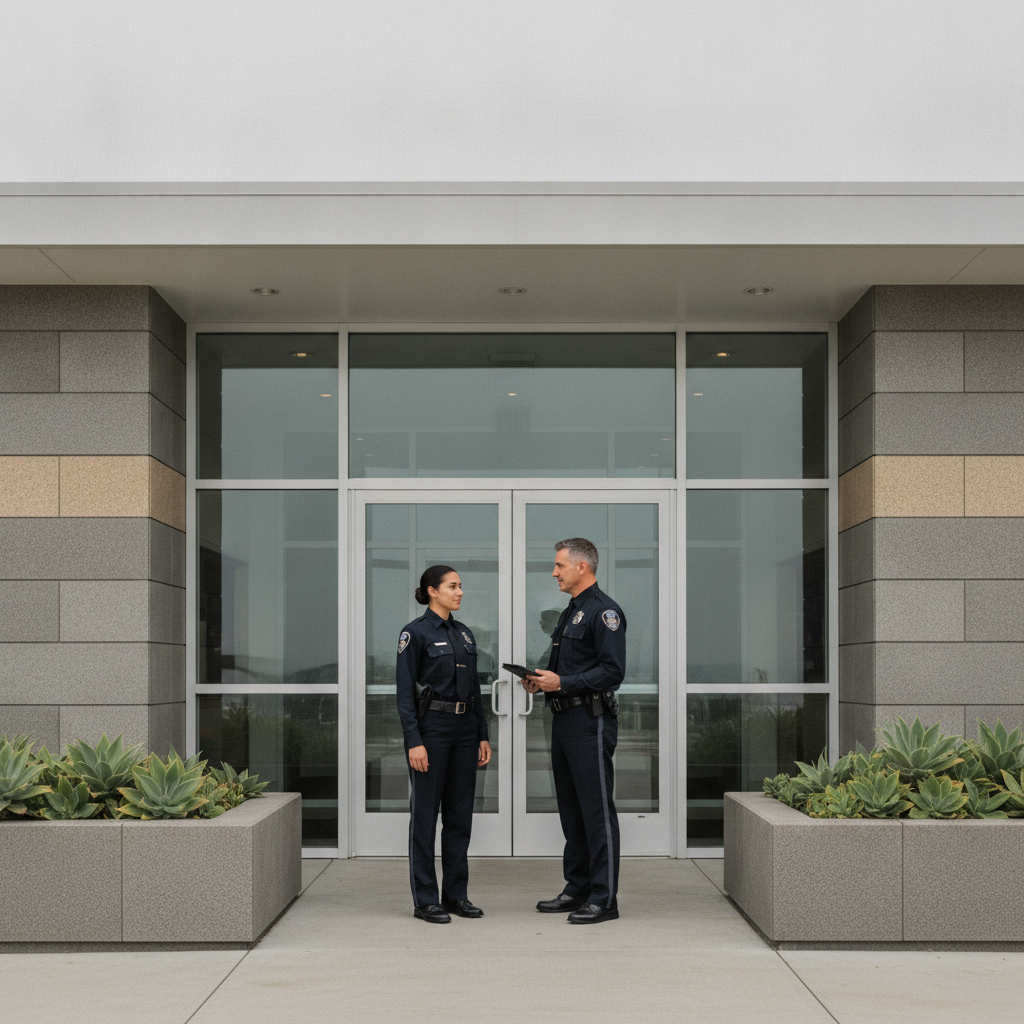
Choosing between armed vs unarmed security guards comes down to one question: does the property face a credible, identifiable threat of serious harm that a firearm would actually change? For most commercial buildings, retail centers, and residential communities in Southern California, the honest answer is unarmed. A smaller set of higher-risk sites genuinely warrant armed coverage. Reaching for an armed guard because it sounds safer, or refusing one to save money, both lead to the wrong coverage. This is how we help clients think it through.
Quick Answer: Armed vs unarmed security guards is a risk decision, not a budget one. Unarmed officers fit most commercial, retail, and HOA properties, providing deterrence, access control, and documented reporting. Armed officers, who hold a separate BSIS Firearms Permit, fit sites with a credible threat to people or high-value assets. Americal Patrol assesses your property free before recommending either.
What Is the Difference Between Armed and Unarmed Security Guards?
An unarmed officer carries no firearm and works through observation, deterrence, reporting, and access control, while an armed officer does all of that and carries a firearm as a last-resort response to a specific, credible threat. The firearm is the only hard line between the two roles, but it changes the training, licensing, and liability behind the assignment.
An unarmed security officer is a trained, licensed guard whose job is presence and judgment. A visible uniform in the right place prevents most of the incidents a property will ever face, because the majority of crime against commercial and residential property is opportunistic. When a would-be trespasser sees an officer, they move on. That is the entire economics of unarmed coverage: consistent, documented presence that resolves problems before they start.
An armed security officer does everything an unarmed officer does and adds a firearm that a small number of assignments genuinely require. The weapon is not the point of the job. It is a tool carried under a much heavier weight of training, permitting, and accountability, and it belongs only where the risk analysis supports it. Both roles fall under the same umbrella of licensed security guards, and both are only as good as the officer’s judgment and the company’s supervision behind them.
The table below summarizes how the two roles diverge once you look past the firearm itself.
| Factor | Armed | Unarmed |
|---|---|---|
| Licensing | BSIS guard card plus a separate BSIS Firearms Permit | BSIS guard card |
| Training | Guard-card training plus firearms, arrest-law, and use-of-force coursework with ongoing requalification | State-mandated guard-card training and background check |
| Insurance and liability | Higher coverage and tighter supervision to match use-of-force exposure | Lower liability profile, presence-and-judgment model |
| Typical settings | Cash or pharmaceutical handling, high-value assets, documented threat history, some industrial and utility sites | Commercial buildings, retail centers, offices, HOAs, most residential communities |
| Cost driver | Added licensing, training, supervision, and insurance raise the cost | Lower cost, built on consistent presence rather than firepower |
When Does a Property Actually Need Armed Security Guards?
Armed officers make sense when a property faces a real, identifiable threat to people or high-value assets, not a vague sense that more is better. Sites handling cash or pharmaceuticals, businesses with a documented history of armed robbery, some utility and industrial sites, and posts where an officer may be the only line between an aggressor and a person are the clearest candidates.
The test we use with clients is simple: would the presence of a firearm change the outcome of the most likely serious incident at that property? If the honest answer is no, an armed officer adds cost and liability without adding protection. If your insurer, your industry, or a documented incident history points to a serious threat, armed coverage deserves a real look. High-value industrial security accounts and construction site security assignments with expensive equipment and materials on open ground are two settings where that calculation more often lands on armed or mixed coverage. Our security coverage across Los Angeles County includes exactly these higher-risk industrial and construction accounts, where the threat is concrete rather than a vague sense of unease.
When Is an Unarmed Security Officer the Right Choice?
For most commercial buildings, retail centers, office parks, apartment communities, and homeowners associations, unarmed officers are the correct choice. These properties need consistent presence, sharp observation, accurate reporting, and enforcement of access and parking rules, and an unarmed officer who knows the site delivers all of that.
An unarmed officer who greets residents by name, knows which gate sticks, and documents everything is worth far more day to day than a firearm that will almost certainly never be drawn. Unarmed coverage also carries a lower liability profile, which matters to boards and owners managing risk on behalf of others. In many settings, introducing a firearm actually raises the risk equation rather than lowering it. This is why our HOA security patrol and residential accounts across communities like our Thousand Oaks security guards service area run almost entirely on unarmed officers backed by mobile patrol.
California leans heavily on this kind of coverage. A UC Berkeley Labor Center study counts roughly 186,000 security guards working in California, the overwhelming majority of them unarmed. Ventura County’s mix of business parks, retail centers, and gated communities is a textbook example of why: these are properties where consistent, documented presence, not firepower, is what actually keeps incidents down.
How Do Licensing and Training Differ for Armed vs Unarmed Guards?
Every legitimate security officer in California must hold a Security Guard Registration, or guard card, issued by the Bureau of Security and Investigative Services, and an armed officer must hold that card plus a separate BSIS Firearms Permit. The permit requires additional classroom and range training, plus ongoing requalification, so the two paths separate sharply.
Earning a guard card requires state-mandated training and a background check through the Department of Justice and the FBI. The California Bureau of Security and Investigative Services (BSIS) maintains a public lookup where any client can verify both a company’s PPO license and an individual officer’s registration before signing anything. Professional standards matter as much as the license itself: industry bodies such as ASIS International, whose membership tops 34,000 security professionals worldwide, exist to codify the training and conduct that separate a credentialed officer from a warm body in a uniform. An armed officer’s Firearms Permit adds training on firearm safety, laws of arrest, and use of force, and holds the officer to a documented standard of judgment about when force is and is not appropriate. That standard is the entire point of the extra training.
At Americal Patrol, every officer we assign is licensed and background checked before they ever set foot on a client site, and our armed officers carry active, current permits. We do not treat the permit as a box to tick. An officer authorized to carry a firearm on your property is someone whose judgment we would trust in the moment that matters. The company’s veteran-owned operational history is one reason clients trust that judgment, a theme we cover further in our post on what veteran-owned actually means in a security company.
How Does Arming an Officer Change Liability and Insurance?
Arming an officer raises the liability stakes for everyone involved, the guard, the security company, and the client, because the potential consequences of a use-of-force event are serious. That is why armed assignments demand higher insurance coverage, tighter supervision, and clearer post orders about exactly when force is authorized.
None of that should scare a property away from armed coverage when it is genuinely needed. It should, however, stop anyone from choosing armed officers casually. A reputable security company carries the insurance to back an armed assignment and will tell you plainly when the risk of arming an officer outweighs the benefit. If a vendor pushes armed coverage everywhere without asking about your actual risk, that is a signal to look elsewhere. Cost also follows the risk here, a dynamic we break down fully in our guide to what drives the cost of security guard service.
How Do You Decide Between Armed and Unarmed Guards for Your Property?
We start every engagement with a free walkthrough of the property. We look at what you are protecting, the history of incidents in the area, access points, lighting, hours of exposure, and who is on site and when. Only then do we recommend armed, unarmed, or a mix, because some properties are best served by unarmed officers day to day with armed coverage for specific high-risk windows.
The goal is not to sell the most expensive option. It is to match the coverage to the real risk, document why, and adjust as conditions change. A property that needed only unarmed patrol last year might warrant more after an incident, and one that over-invested in armed coverage can often scale back safely once the risk is understood. Whether the answer is a dedicated post, a mobile patrol service, or a hybrid, the decision follows the exposure. If you are weighing the two coverage models themselves, our companion post on security patrol vs standing guard walks through that choice in detail.
If you are weighing armed against unarmed guards for your property, the fastest way to a clear answer is to have someone assess the site in person. Americal Patrol has provided licensed security patrol services across Southern California since 1986, and today serves commercial, industrial, and residential clients across our Oxnard security guards service area and throughout Ventura, Los Angeles, and Orange Counties. Call us at (805) 515-3834 for a free consultation, or request a free security assessment, and we will give you a straight recommendation based on what your property actually needs.
Frequently Asked Questions
Are armed security guards more effective than unarmed guards?
Not inherently. Effectiveness comes from the officer's training, judgment, and consistent presence, not from the weapon. For most properties, an unarmed officer who deters, observes, and documents is more effective day to day. Armed coverage only outperforms unarmed on sites facing a specific, credible threat of serious harm.
Does my property need armed or unarmed security?
Most commercial, retail, office, and residential properties are best served by unarmed officers. Armed coverage is warranted when a site handles cash or high-value assets, has a documented incident history, or faces an identifiable threat to people. A free site assessment is the reliable way to decide.
What licensing do armed security guards need in California?
Every officer must hold a BSIS Security Guard Registration, or guard card, earned through state-mandated training and a Department of Justice and FBI background check. Armed officers must additionally hold a BSIS Firearms Permit, which requires firearms, arrest-law, and use-of-force training plus ongoing requalification.
Is Americal Patrol licensed to provide both armed and unarmed guards?
Yes. Americal Patrol operates under California BSIS PPO License #9557 and provides both unarmed and armed officers. Our armed officers carry active, current BSIS Firearms Permits, and every officer is licensed and background checked before assignment to a client site.
Does an armed guard increase my liability as a property owner?
Arming an officer raises the stakes of any use-of-force event, which is why armed assignments require higher insurance, tighter supervision, and clear post orders. A reputable company carries the coverage to back an armed post and will advise against arming when the risk outweighs the benefit.
How much do armed guards cost compared to unarmed guards?
Armed officers cost more because they carry additional licensing, training, supervision, and insurance requirements. There is no single rate, because cost depends on your coverage hours and model. There are no setup fees, and Americal Patrol provides a free consultation and site-specific recommendation.
Can a property use both armed and unarmed officers?
Yes, and many do. A common approach is unarmed coverage day to day with armed officers assigned only to specific high-risk windows, positions, or events. Matching armed presence to the hours and points of real exposure controls both risk and cost.
Where does Americal Patrol provide armed and unarmed security?
Americal Patrol serves Ventura, Los Angeles, and Orange Counties from its Oxnard headquarters, including communities such as Oxnard, Camarillo, Ventura, Thousand Oaks, and Port Hueneme. Call (805) 515-3834 to confirm coverage and request a free assessment for your property.